
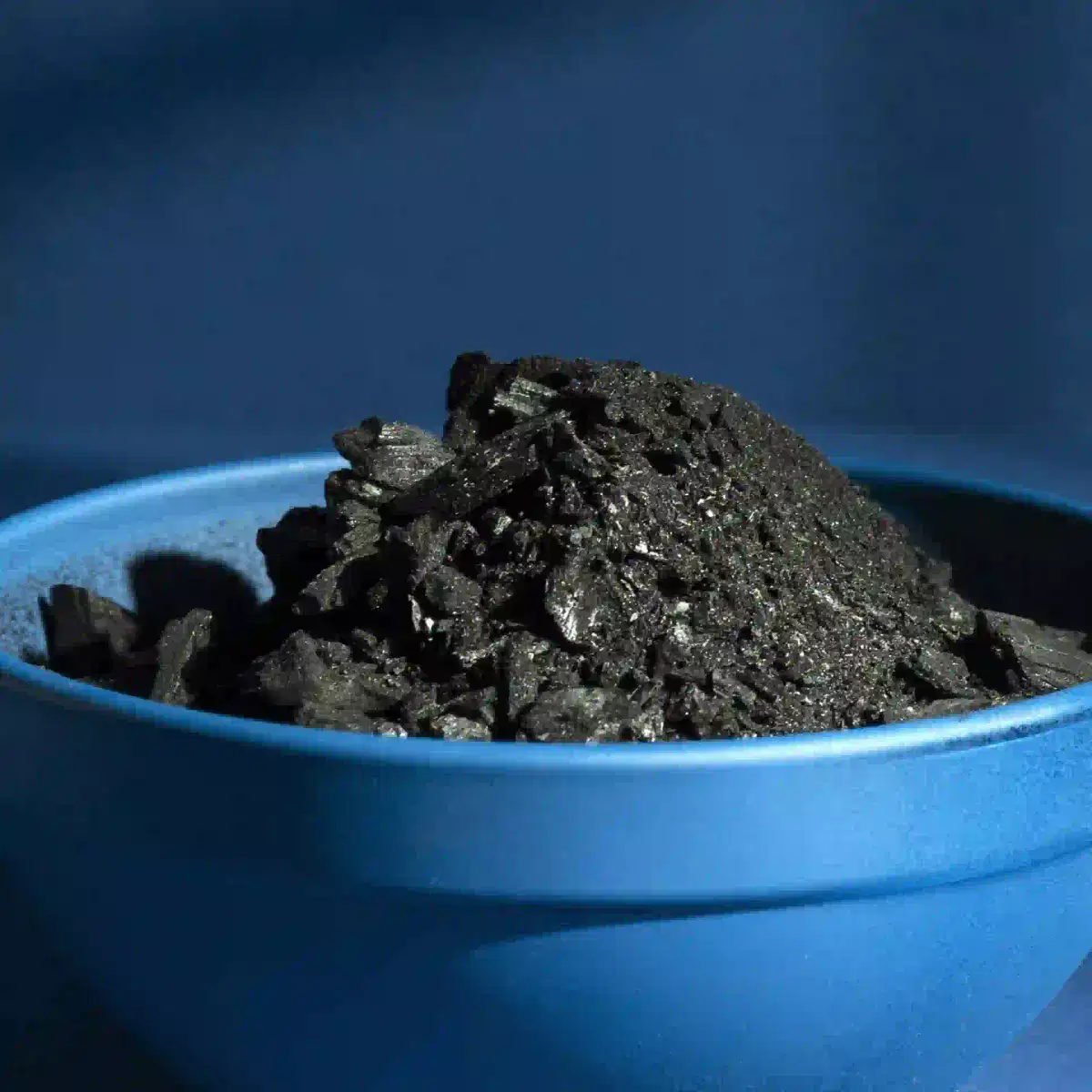
Carbon Black (N110) - India
- IUPAC Name
- carbon
- Molecular Formula
- C
- Molecular Weight (g/mol)
- 12.0100
- Synonyms & Trade Names
- Carbon black; Furnace black; Channel black; N110
- Purity / Assay (%)
- 98% min C
- Grade / Quality Level
- Industrial Grade
Categories
Technical Document
Brief Overview
Carbon black, found in various forms like acetylene black, channel black, furnace black, lamp black, and thermal black, is a residue left after the incomplete combustion of heavy petroleum fuels such as coal, ethylene cracking tar, FCC tar, and, to a lesser extent, vegetable oil. Comprising over 96% amorphous carbon and trace elements like oxygen, hydrogen, nitrogen, and sulfur, concentrated on the surface, it takes the form of a finely divided black pellet or powder. Oxidized carbon black can contain up to 15% oxygen.
The characteristics of carbon black can be tailored for specific applications, resulting in a diverse range influenced by production methods and process parameter variations. It is composed of chain-type or botryoidal aggregates formed from small, mostly spherical particles during production. These aggregates combine to form large agglomerates in the reactor. Conductive carbon blacks, distinguished by their high specific surface area and extensively branched aggregates, are utilized in applications like antistatic coatings for plastics.
Manufacturing Process
Hydrocarbons, such as oil or natural gas, are utilized as input materials in processes involving partial combustion or thermal breakdown, resulting in the creation of carbon black. The classification of carbon black is determined by the production technique, as its properties vary based on the method employed. The term "furnace black" specifically denotes carbon black produced through the furnace process, currently the most widely adopted method, setting it apart from carbon black generated through alternative methods. In this procedure, carbon black is produced by partially combusting coal or petroleum oil as a raw material (feedstock oil) in high-temperature gases. Due to its high yield and precise control over attributes like particle size and structure, this method is favored for mass production.