
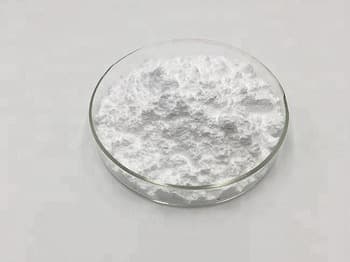
Zinc Sulphide
- IUPAC Name
- zinc sulfide
- Molecular Formula
- ZnS
- Molecular Weight (g/mol)
- 97.4400
- Synonyms & Trade Names
- Zinc sulfide; Zinc blende; Sphalerite; ZnS
- Purity / Assay (%)
- 97% min
- Grade / Quality Level
- Technical Grade
Categories
Technical Document
Brief Overview
Zinc Sulfide (ZnS) is a naturally occurring salt that appears in liquid form as a yellowish-white powder. It has two common crystalline forms, which are Sphalerite (zinc blende) and Wurtzite. Sphalerite has a cubic crystal structure, and this form is the predominant form in nature. Meanwhile, wurtzite has a hexagonal crystal which is made by heating the sphalerite to 1020°C. Zinc sulfide is commonly employed as a pigment for paint, plastic, and rubber. It is also phosphorescent, which makes it useful for several decorative and electronic applications, such as luminescent cosmetics, x-ray, glowing paint, etc.
Manufacturing Process
Zinc sulfide is obtained as by-product from the synthesis of ammonia from methane. The hydrogen sulfide impurities in the natural gas reacts with the zinc oxide to form zinc sulfide.
ZnO + H2S → ZnS + H2O
Another method is through the reaction of zinc sulfate and sodium sulfide, followed by calcination. The zinc sulfide is produced as the hydrogen sulfide passes the zinc salt formed from the initial reaction.
Elemental zinc and sulfur can also be reacted together to form zinc sulfide. However this is a violent reaction and is accompanied by rapid evolution of gas, light, and heat.