Explore our network of country and industry based websites to access localized information, product offerings, and business services across our group.
Log in to start sending quotation requests for any product.
Don't have an account? Sign Up Here
Home Asia's Carbon Black 2026: Innovations in Black Pigment Uses
Trade Insights | Applications and Buyers | 02 April 2026
Introduction
The Evolving Landscape of Carbon Black in Asia
Key Applications Driving Demand for Black Pigments
Spotlight on Advanced Carbon Black Products
Sustainability and Innovation in Production
Sourcing and Distribution: The Role of Specialized Partners
Conclusion
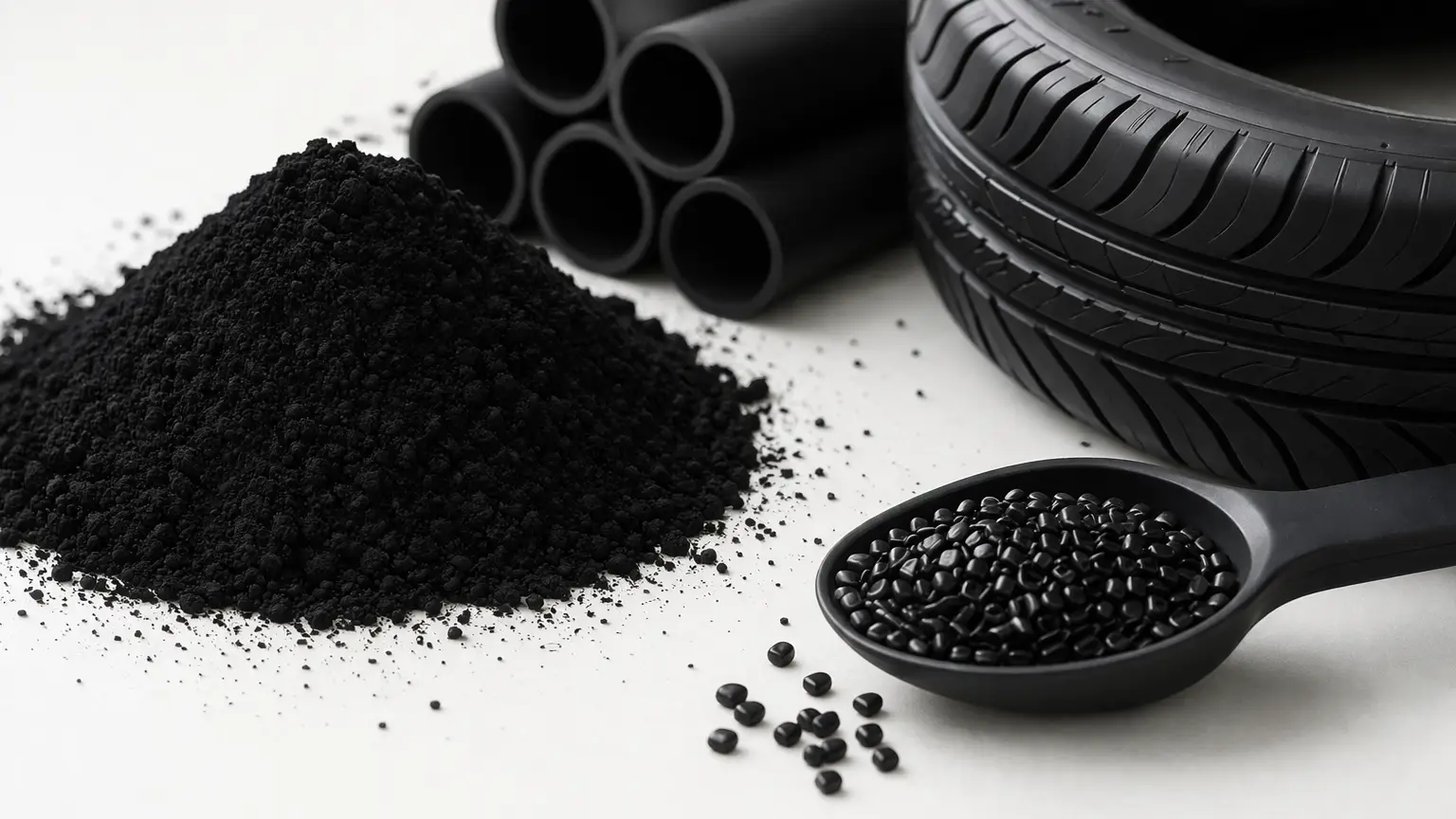
The carbon black industry in Asia stands at a pivotal juncture. As the world's manufacturing powerhouse, the region's demand for this essential black pigment is not only immense but also rapidly evolving. Far beyond its traditional role as a mere colorant, carbon black is now a critical performance additive, enhancing durability, conductivity, and UV protection in a myriad of applications. From the vibrant automotive paints rolling off production lines in Thailand and China to the high-performance tires manufactured in India and Indonesia, advanced carbon black formulations are integral to product quality and innovation.
Looking ahead to 2026, the industry is being reshaped by powerful forces: stringent environmental regulations, a push for sustainable production, and the relentless demand for higher-performance materials. For stakeholders in the paint industry, polymer manufacturing, and ink production, understanding these trends is no longer optional—it's a competitive necessity. This article delves into the innovations transforming Asia's carbon black landscape, examining key applications, groundbreaking product developments, and the crucial role of expert chemical distributors in navigating this complex market.
Asia dominates the global carbon black market, accounting for over half of both production and consumption. China remains the undisputed leader, but significant growth is being witnessed in Southeast Asian nations like India, Vietnam, and Indonesia. This growth is fueled by the region's expanding automotive, construction, and packaging sectors. However, the landscape is not just about scale; it's about sophistication. Governments across Asia are implementing stricter environmental codes, such as China's "Blue Sky" campaign and India's BS-VI emissions standards, which directly impact the carbon black value chain, pushing manufacturers towards cleaner furnace processes and sustainable raw materials.
The market is also experiencing a strategic shift from commodity-grade carbon black to high-value specialty carbon black. While tire reinforcement (the largest application) still relies heavily on standard grades, industries like plastics, coatings, and batteries are driving demand for pigments with tailored properties. These include ultra-pure grades for food-contact packaging, high-conductivity blacks for lithium-ion battery anodes, and finely dispersed pigments for deep, jet-black automotive coatings. This diversification is creating new opportunities and challenges for both producers and end-users, who require precise technical specifications and consistent quality.
Furthermore, supply chain dynamics are in flux. The post-pandemic era, coupled with geopolitical tensions, has highlighted the need for resilient and diversified sourcing strategies. Companies are looking to partner with distributors who have a robust pan-Asian network, ensuring a steady supply of critical materials like carbon black despite regional disruptions. This environment makes the role of established distributors with digital platforms and local expertise, such as those under the Chemtradeasia network, increasingly vital for industrial operations across the continent.
The versatility of carbon black ensures its presence in countless everyday products. In the paint and coatings industry, which is a primary focus for platforms like paintcoatingsasia.com, carbon black is indispensable. It provides not just color but critical functional benefits. In automotive coatings, it offers superior jetness, UV resistance to prevent fading, and enhanced mechanical strength. For industrial and protective coatings, carbon black improves weatherability and provides a conductive path for electrostatic spray applications. Architectural paints utilize it for deep, rich shades and to improve tint retention over time.
Beyond coatings, the plastics and polymers sector is a major consumer. Here, carbon black acts as a cost-effective black colorant for products ranging from automotive interiors and pipes to consumer electronics casings. More importantly, it serves as a highly effective UV stabilizer, protecting polymers from degradation caused by sunlight, which extends the lifespan of outdoor furniture, agricultural films, and construction geomembranes. This dual functionality—coloration and protection—makes it an irreplaceable additive in polymer compounding.
Another high-growth application is in energy storage and electronics. Specialty conductive carbon blacks are essential components in lithium-ion batteries, where they form the conductive network in the anode, and in fuel cells. They are also used in cables for semi-conducting shields, in antistatic packaging for sensitive electronic components, and in printing inks for flexible electronics. As Asia pushes forward with electric vehicle adoption and digitalization, demand from these high-tech sectors is projected to surge significantly through 2026, creating a premium market for advanced carbon black products.
The modern carbon black portfolio is highly segmented to meet specific industrial needs. Understanding these product categories is key to selecting the right material. Furnace Black is the most common type, produced by the partial combustion of heavy aromatic oils. It is categorized by its particle size and structure. Larger-particle, low-structure furnace blacks are used for UV protection in plastics, while smaller-particle, high-structure grades provide superior reinforcement and conductivity, making them ideal for tires and battery electrodes.
Specialty Carbon Blacks represent the innovation frontier. These include High-Purity Carbon Blacks with extremely low polycyclic aromatic hydrocarbon (PAH) content, essential for food packaging, toys, and medical devices. Conductive Carbon Blacks feature a complex, chain-like structure that creates an extensive conductive network at low loading levels, perfect for antistatic films, cables, and battery applications. For the coatings industry, Pigment Blacks are engineered for easy dispersion, high jetness (blackness), and a clean blue undertone, which is highly prized in automotive and industrial paints for achieving a deep, luxurious finish.
When sourcing these materials, specifications such as particle size (nm), surface area (m²/g), oil absorption number (indicating structure), and volatile content are critical. A distributor's ability to provide consistent batches that meet these exact specs is paramount. For instance, a paint formulator requiring a pigment black for an automotive basecoat will need a product with a primary particle size below 25 nm and excellent dispersion characteristics to avoid defects. Platforms like chemtradeasia.com and its regional variants facilitate access to a wide range of these specialized grades, connecting manufacturers with the precise black pigment required for their application.
Sustainability is no longer a niche concern but a central driver of innovation in the carbon black industry. Traditional furnace black production is energy-intensive and generates significant CO2 emissions. In response, Asian producers are investing in technologies to capture waste heat and utilize it for power generation, dramatically improving the carbon footprint of their plants. Furthermore, the industry is exploring the use of alternative feedstocks, such as bio-based oils or pyrolysis oil from end-of-life tires, to create "green" or renewable carbon black—a trend gaining rapid traction.
Another innovative pathway is the development of recycled carbon black (rCB). Produced through the pyrolysis of scrap tires, rCB recovers both carbon and energy from waste. While its properties can differ from virgin furnace black, it presents a compelling circular economy solution for non-critical applications like non-color plastics, rubber mats, and certain construction materials. Major tire and automotive companies in Asia are actively investigating and setting targets for incorporating rCB into their products, signaling a strong market pull for sustainable alternatives.
On the product innovation front, researchers are developing surface-modified carbon blacks. By chemically treating the surface of carbon black particles, manufacturers can enhance compatibility with specific polymer matrices, improve dispersion stability in liquid systems, or introduce new functional groups. This allows for even lower loading levels to achieve the same performance, reducing material use and cost. For the paint and coatings sector, this means formulations that are not only high-performing but also potentially lower in VOC (Volatile Organic Compound) content, aligning with regional environmental regulations.
In a market as complex and fast-moving as Asia's carbon black industry, efficient and reliable sourcing is a critical competitive advantage. This is where specialized chemical distributors add immense value. They act as more than just intermediaries; they are supply chain partners who provide market intelligence, technical support, and logistical expertise. A distributor with a strong regional footprint, such as the Chemtradeasia network spanning Singapore (chemtradeasia.sg), Indonesia (chemtradeasia.co.id), the UAE (chemtradeasia.ae), and India (chemtradeasia.in), can navigate local regulations, customs, and supply constraints to ensure timely delivery.
For paint manufacturers and compounders, the right distributor provides access to a curated portfolio of black pigment grades from multiple producers. This allows for comparison, contingency planning, and cost optimization. Furthermore, reputable distributors provide essential documentation, including Material Safety Data Sheets (MSDS/SDS) and certificates of analysis, which are non-negotiable for quality assurance and regulatory compliance. Their technical teams can often assist with initial product selection and troubleshooting, bridging the gap between producer specifications and end-user application challenges.
The digitalization of chemical distribution, exemplified by B2B platforms, has further transformed sourcing. Buyers can now research products, compare specifications, check stock levels, and even initiate procurement online, streamlining the entire process. This digital transparency, combined with localized service and deep industry knowledge, empowers businesses across Asia to secure the advanced carbon black products they need to innovate and grow, confidently facing the demands of the 2026 market and beyond.
The trajectory of Asia's carbon black industry points toward a future defined by performance, sustainability, and smart supply chains. As we approach 2026, the shift from a commodity to a specialty-driven market will accelerate, with innovations in conductive grades, sustainable production, and surface-modified pigments creating new possibilities for the paint, plastics, and energy sectors. Success in this evolving landscape will depend on a deep understanding of these technical trends and the ability to source the right materials consistently and efficiently.
Forging strategic partnerships with knowledgeable chemical distributors will be a cornerstone of this success. These partners provide the crucial link between global innovation and local application, ensuring that manufacturers have access to the high-quality, advanced carbon black pigments required to meet tomorrow's challenges. By staying informed and connected, businesses can leverage carbon black not just as an ingredient, but as a catalyst for product differentiation and market leadership in the dynamic Asian industrial arena.
Disclaimer: This article is for informational and market insight purposes only. It is not intended as technical, safety, or professional advice. The information presented regarding product specifications, applications, and market trends should be verified independently. We strongly advise readers to consult directly with technical experts, refer to official product documentation and safety data sheets (SDS/MSDS), and contact our team for guidance on specific applications and compliance requirements.
We're committed to your privacy. Tradeasia uses the information you provide to us to contact you about our relevant content, products, and services. For more information, check out our privacy policy.


 English
 Indonesian
 简体字
简体字
 العربية
 Español
 Français
 Português
 日本語
日本語
 한국어
한국어
 Tiếng Việt